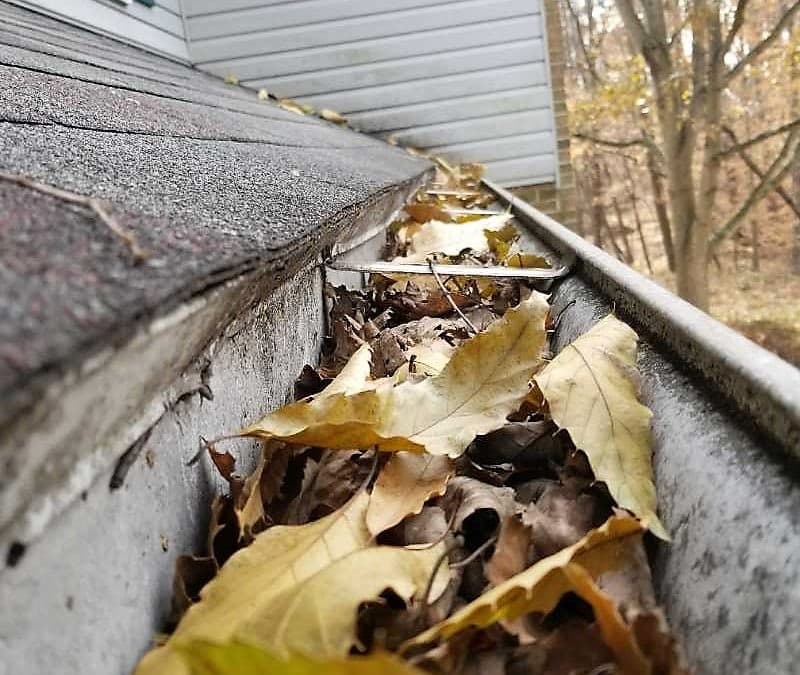
Blocked gutters don't announce themselves the way a burst pipe does. The damage they cause builds slowly, quietly, and often in places you don't look often — behind cladding, under eaves, along foundation walls. By the time water is actually getting inside the house, the gutter blockage that caused it has usually been sitting there for months, doing its work one rainfall at a time. Knowing what early damage looks like — both outside and inside the house — means you can catch the problem while it's still cheap to fix.
Why blocked gutters cause water damage
A functioning gutter's job is to collect rainwater from the roof and route it away from the house through downpipes. When a gutter blocks — whether with compacted leaves, silt, seed pods, or a blocked downpipe — water has nowhere to go during rain. It sits in the channel and eventually spills over the edge.
That overflowing water doesn't just fall harmlessly to the ground. It runs down the fascia board, soaks into the soffit, drips behind the cladding, pools around the foundation, and saturates the soil directly against the house. Over time, each of these pathways causes its own type of damage. The house isn't designed to handle water coming from above rather than from rainfall — it's built to keep it moving and away. When the gutter stops doing that, the building slowly starts absorbing what it was never meant to absorb.
External warning signs
The outside of the house usually shows the first signs of gutter-related water damage. These are worth checking during or shortly after heavy rain, and also during a casual walk-around inspection in dry weather when staining is easier to spot.
Stained or discoloured fascia boards
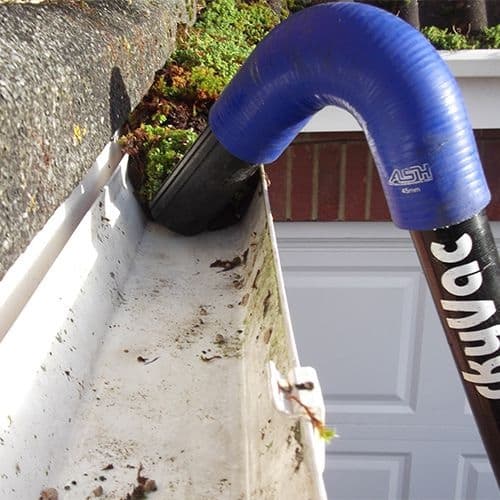
The fascia is the long horizontal board that the gutter is fixed to, running along the eave line. When a gutter overflows consistently — especially in the same spot where it's most heavily blocked — water runs down the outside face of the fascia. This shows up as dark vertical staining, streaking, or discolouration running from the gutter line downward. Painted fascias often show this as paint bubbling, flaking, or a tide-mark pattern. Unpainted timber fascias may start to show softening or darkening.
Overflow marks on cladding
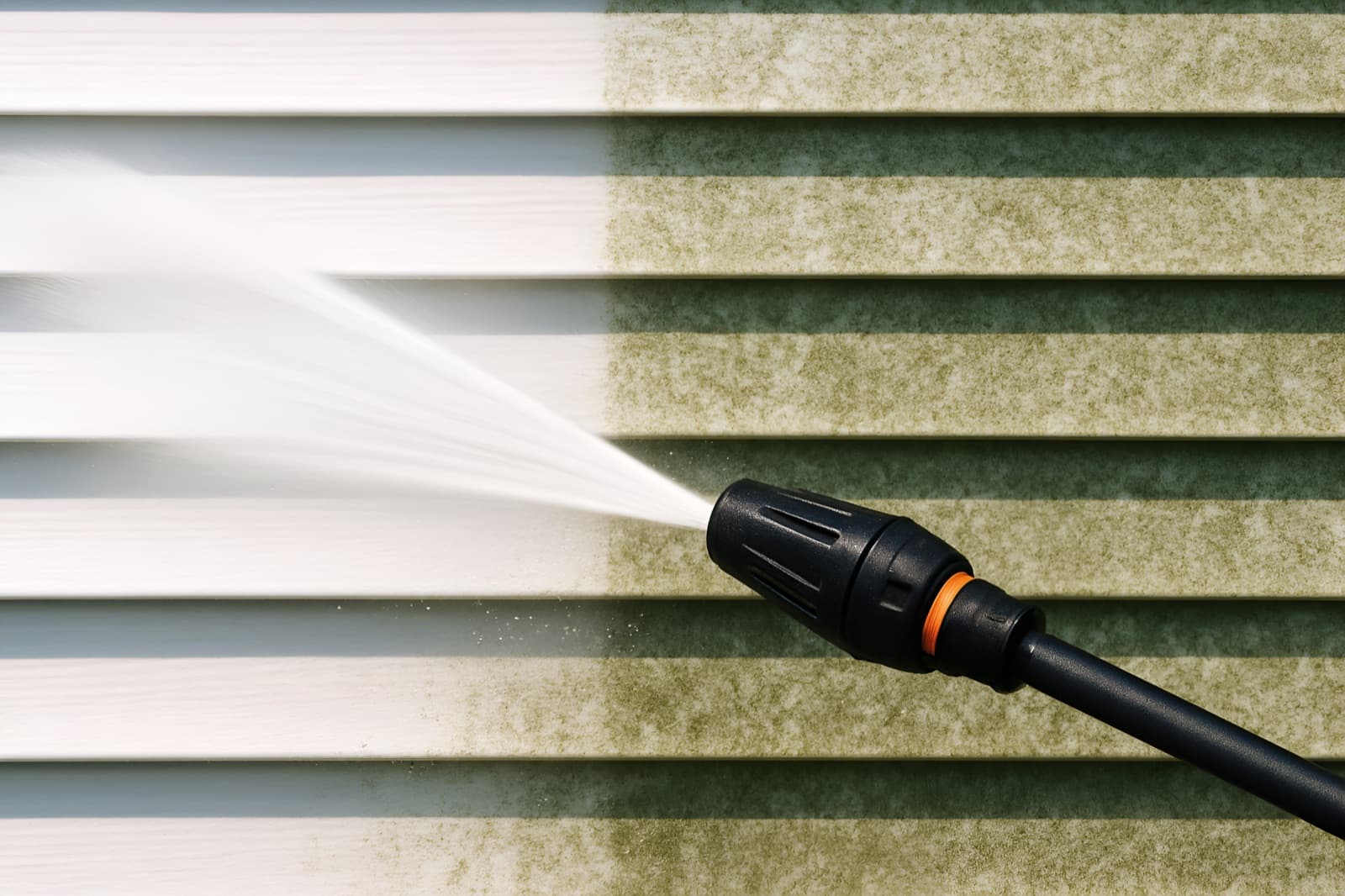
Where water runs down the fascia it often continues onto the cladding below — leaving streak marks or mineral deposits. These marks tend to follow a consistent pattern: the staining is heavier near the eave and tapers off lower down. On lighter-coloured paint or fibre cement, this shows up as greenish-grey organic staining or brownish tide marks. The pattern can be subtle enough to overlook on a casual glance but obvious once you know what you're looking for.
Peeling or bubbling exterior paint
Paint that bubbles or peels on the upper sections of exterior walls — particularly near or under the eave line — is often a moisture problem rather than a surface preparation issue. If the paint behind the eave is blistering while the rest of the wall is holding fine, the source of moisture is almost certainly above it: either the gutter overflowing or water sitting in a blocked gutter and wicking back through the fascia.
Green algae or moss on walls near eaves
Persistent damp conditions on the upper section of exterior walls encourage algae and moss growth. If you notice patches of green starting from the eave line and creeping down, it's a sign that the wall in that area is staying wet for longer than it should — often because of overflowing water above. This is particularly visible on the shaded side of the house where the wall takes longer to dry out.
Pooling water or soggy soil at the foundation
Water that overflows from a gutter doesn't land neatly on the path — it lands at the base of the wall, right where the foundation meets the soil. Over time this creates persistently saturated ground against the foundation. You might notice the soil never fully dries out in that area, puddles that persist after rain, or grass that's unusually lush in a narrow strip along the house wall. In older homes with concrete or stone foundations, this persistent moisture can lead to cracking or spalling over years.
Internal warning signs
Once water has found a pathway into the building fabric, it eventually shows up inside — though sometimes weeks or months after the external signs appeared. Internal signs tend to indicate the problem has progressed beyond surface damage.
Damp patches on interior ceilings near exterior walls
A damp patch on the ceiling, particularly in a corner or along a wall that backs onto an external eave, is a serious warning sign. Water that's consistently overflowing from a blocked gutter above can work back through the soffit, saturate the ceiling lining, and eventually become visible as a dark or bubbled patch. These patches are often mistaken for roof leaks — and sometimes they are — but a gutter overflow is a common and underdiagnosed cause, especially when the patch is close to an external wall rather than in the centre of the ceiling.
Damp or musty smell in wall cavities
Not all water ingress makes it through to a visible surface stain. Water can saturate insulation or building wrap inside a wall cavity without ever appearing as a stain on the interior lining. The first sign is often a faint musty smell in rooms that back onto an external wall — particularly in bedrooms or living areas near the eave line. If you can smell damp but can't find the source, checking the gutter condition above that area is worth doing before assuming it's a plumbing or ventilation issue.
Condensation or moisture on windows near eaves
Unusual condensation on the interior of windows on the upper floor — particularly in the same area as external staining — can indicate elevated humidity in the wall cavity caused by water ingress. This is more likely to be noticed in winter when temperature differences make condensation more visible.
Why catching it early saves money
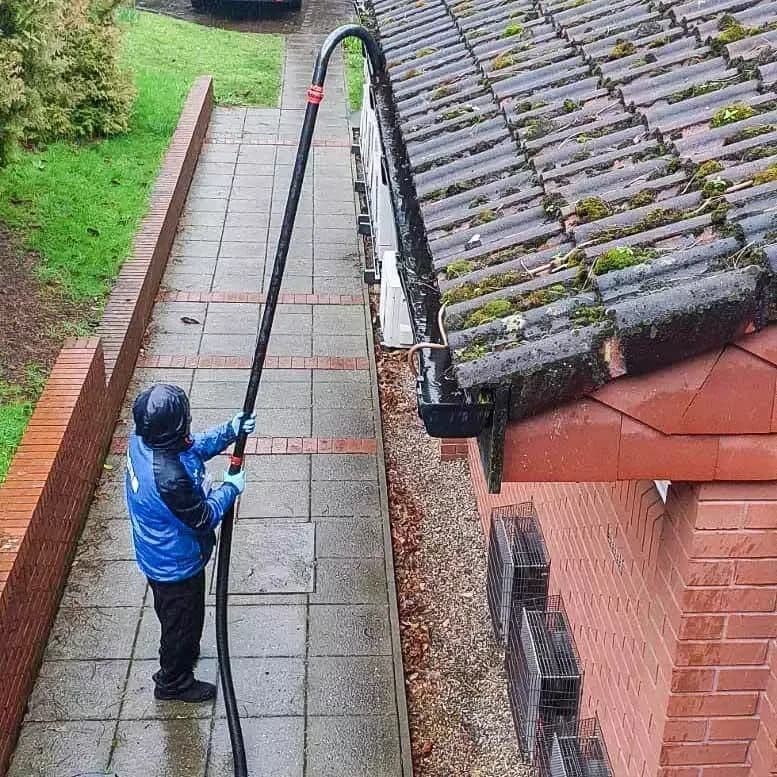
The cost difference between catching gutter-related water damage early versus late is significant. A blocked gutter is a routine clean — typically a quick job, especially with modern ground-based equipment. Stained fascia paint is a repainting job. But saturated timber framing, rotted fascia boards, damaged soffit lining, or foundation moisture problems are all trades jobs with substantially higher price tags.
- Fascia board replacement: Once the timber has softened and rotted through, the board needs to come down and be replaced — often with scaffolding involved.
- Soffit repairs: Damaged soffit lining is fiddly to access and repair, and often requires painting to match once fixed.
- Ceiling lining: Replacing water-stained plasterboard and repainting a ceiling section is more involved than it sounds, especially if the damage has affected the structure above.
- Foundation drainage: Persistent moisture against a foundation sometimes requires remediation work — retaining, drainage channels, or waterproofing — that's considerably more expensive than the gutter clear that could have prevented it.
- Mould remediation: In severe cases, persistent moisture inside wall cavities leads to mould growth that requires specialist remediation — one of the most expensive outcomes of long-term water ingress.
How to check your gutters
If you've noticed any of the signs above, or simply haven't had your gutters checked in a while, the most reliable approach is a professional clean with a camera inspection. The system we use — the SkyVac 85 gutter vacuum — includes a live camera feed that shows the inside of the gutter channel before and after cleaning. You can see exactly where debris has been sitting, whether a downpipe is clear, and what condition the gutter itself is in. It takes the guesswork out of it.
You can also do a basic check yourself during or after heavy rain: walk around the house and look for water overflowing the front edge of the gutter rather than going into the downpipe. Overflow from a specific section almost always indicates a blockage in that area or a blocked downpipe below it. Our guide on what causes gutters to overflow walks through the common causes in detail.
Staying ahead of the problem
The most effective way to avoid gutter-related water damage is simply keeping to a regular cleaning schedule — typically once or twice a year depending on how quickly your gutters fill. For most Waikato homes, a late-autumn clean after the main leaf drop is the critical one. Properties with significant tree coverage may need a second clean in spring. Our guide on how often you should clean gutters covers the timing in more detail.
If you're seeing any of the warning signs described here — staining on the fascia, damp patches, overflowing water — the sensible first step is to get the gutters cleared and inspected before investigating further. A significant proportion of the time, clearing the blockage stops the problem. And if the gutter itself has been damaged by sitting water over a long period, a camera inspection will show that too.
If you'd like us to take a look, get in touch for a no-obligation quote. We cover the whole Waikato — Hamilton, Te Awamutu, Cambridge, Morrinsville, and surrounding areas — and the job is done from the ground with no ladders and no mess left behind. See the gutter cleaning cost guide if you'd like an idea of what to expect.