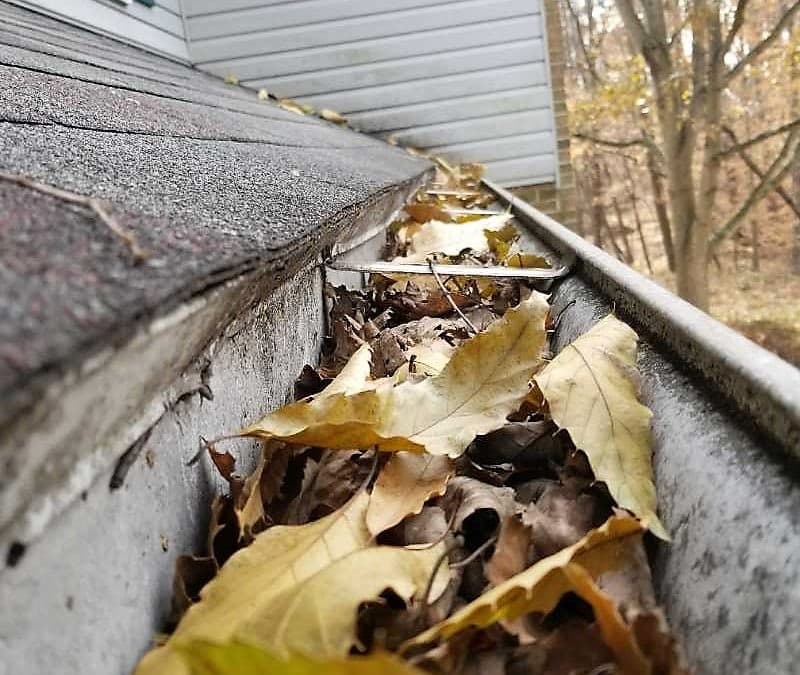
If you've got a shaded or damp section of roofline in the Waikato, you've probably noticed the slow creep of moss and lichen. It appears first as a faint green tinge on the roof, then starts working its way into the gutters — building up into a spongy mat that holds moisture and blocks flow. It's one of the slower-moving gutter problems, but if you leave it long enough, it does real damage. Here's how to deal with it properly.
Why moss and lichen love Waikato rooflines
Moss and lichen thrive in conditions with shade, moisture and still air — and the Waikato delivers all three. The region's mild, damp winters create ideal growing conditions, and properties with large trees nearby (which shade the roof and drop organic material to grow in) tend to develop moss faster. North-facing rooflines that get full sun tend to stay cleaner; south-facing or shaded aspects can develop significant moss growth in just a few years. Metal roofs and older concrete tile roofs are both susceptible, though the rough surface of concrete tiles does tend to hold moss more readily than smooth iron.
What moss and lichen actually do to your gutters
Moss in a gutter does a few things, none of them helpful. It holds water against the gutter surface, which accelerates corrosion on steel spouting and causes premature deterioration of older gutters. It adds to blockage — a mat of moss in the gutter catches every leaf and piece of debris that comes through, creating a composite blockage that's harder to clear than leaf debris alone. It also adds weight to the gutter run, which over time can pull brackets and cause sagging sections. Left long enough, moss can actually work its way up under roofing iron at the gutter edge.
Lichen is a different organism — it's a partnership of algae and fungi — and it attaches more firmly to surfaces than moss. It doesn't grow quite as thick, but it's harder to remove and its anchoring means it can etch into the surface of some roofing materials over time.
How to remove moss from gutters
There are a few approaches, and the right one depends on how bad the build-up is.
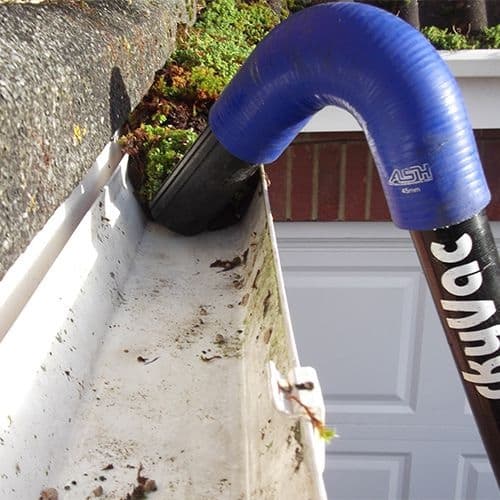
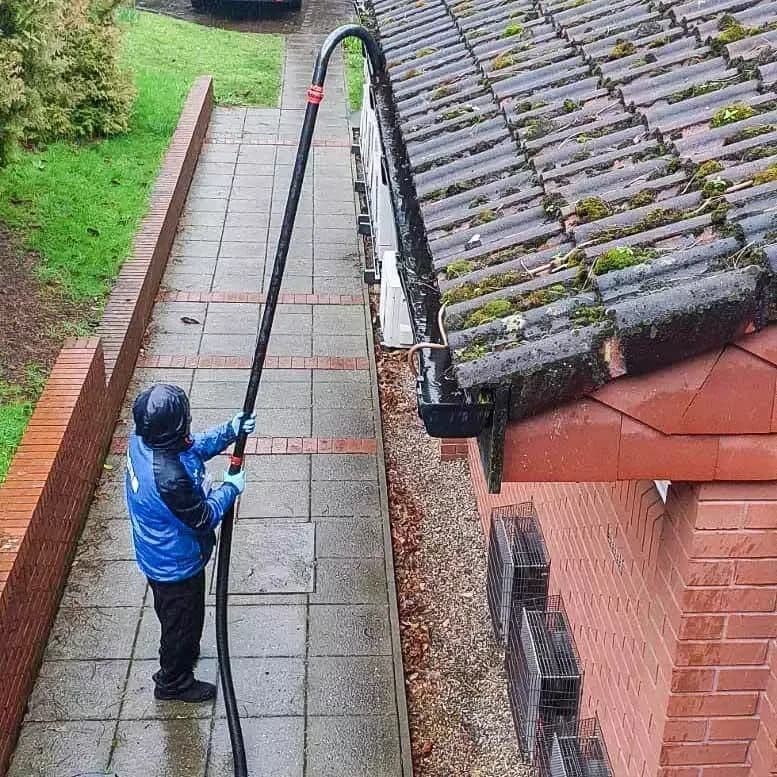
- Vacuum removal — a gutter vacuum like the SkyVac 85 is highly effective at pulling out loose and semi-attached moss along with leaves and silt. For moderate growth, this is usually sufficient to get the gutter clear and flowing
- Soft wash treatment — for heavier growth, or moss that's firmly attached to gutter surfaces, a soft wash with a biocide (typically a sodium hypochlorite or sodium percarbonate solution) kills the organism first and then it's removed on the next clean or washed away by rain
- Manual scrubbing — effective but requires access, which means ladders or scaffolding; not the preferred approach for safety reasons
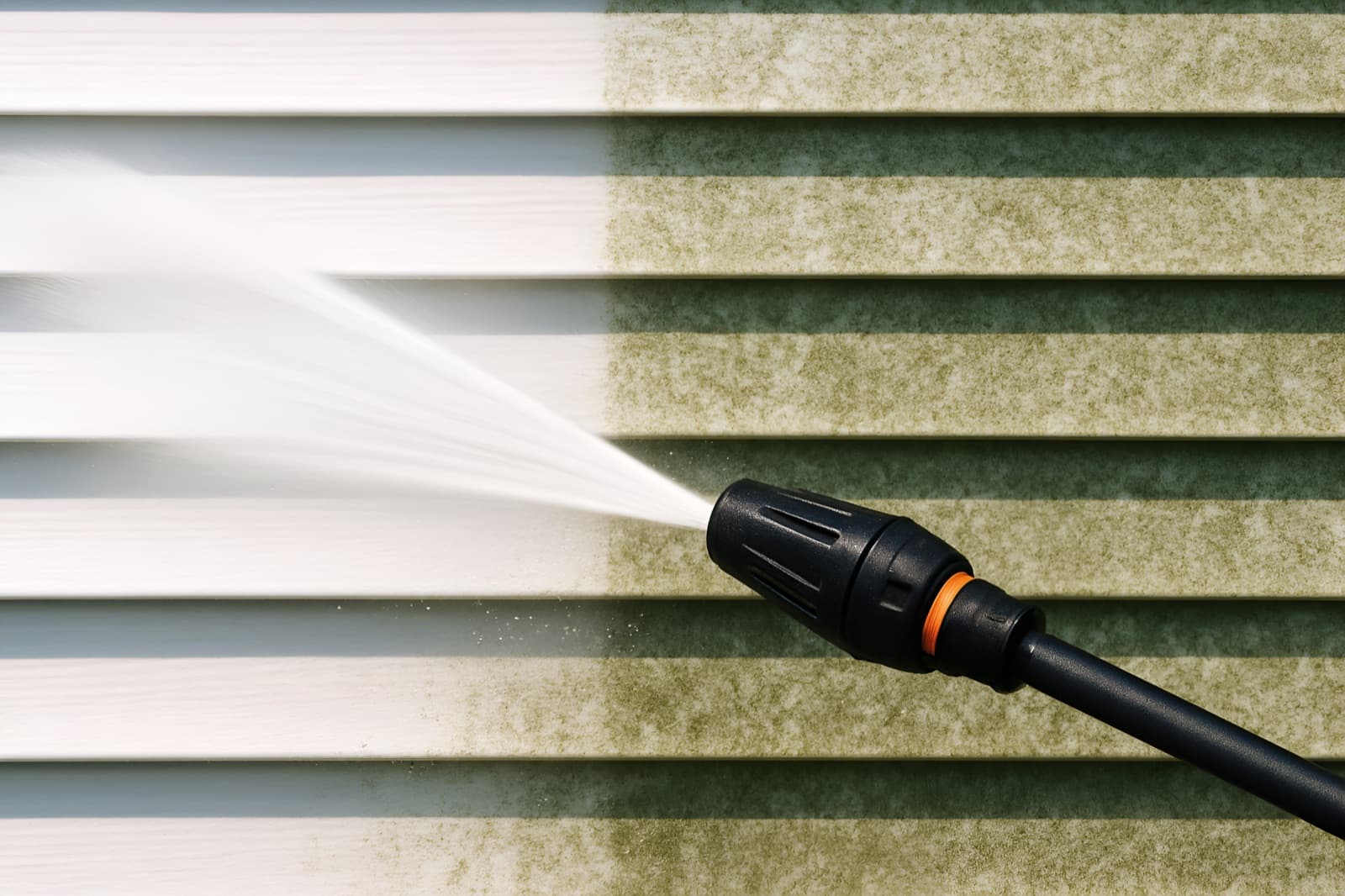
- High pressure washing — not recommended directly inside gutters as it can force water up under roofing iron and damage older gutter seals; better suited to roof surfaces away from the gutter edge
What about moss on the roof itself?
If there's significant moss in your gutters, there's almost certainly moss on the roof surface above — and that's the source of the problem. Rain washes roof moss down into the gutter, so if you only clear the gutter without treating the roof, the gutters will be refilled with washed-down moss within a season or two. A proper roof and gutter clean that includes a soft wash treatment on the roof surface is a more lasting solution than clearing the gutters alone.
Soft washing uses low pressure and a biocide solution to kill moss and lichen at the root. It's safer for roofing materials than high-pressure washing, doesn't blast granules off asphalt tiles or dent iron, and the treatment continues to work for months after application as rain gradually washes the dead growth off the surface. It's the standard approach for most residential roof cleaning in New Zealand.
How to slow moss regrowth
Once the moss is treated and removed, there are a few things that slow it coming back:
- Zinc strips — a strip of zinc or copper along the ridge cap releases ions as it rains, which inhibits moss and algae growth on the roof below. They're not instant but effective over time
- Tree trimming — reducing the canopy over the roof lets in more sun and reduces the damp, shaded conditions moss needs
- Regular cleaning schedule — a gutter clean every 12–18 months keeps moss from getting established
- Biocide retreatment — most soft wash treatments are active for 1–3 years; retreating before heavy regrowth starts is easier than dealing with it fully established
How often do mossy gutters need attention?
For a property with active moss growth, we'd suggest having the gutters cleared and checked at least once a year — ideally in autumn before winter rain arrives to flush more material in. If the roof itself has significant moss cover, a combined roof and gutter treatment every two to three years is a sensible investment that prevents the worst of the damage.
Not sure how bad your moss situation is? Get in touch for a free quote — we'll take a look at the roof and gutters and give you a straight assessment of what needs doing and how often.